A leftover container can look harmless sitting in the refrigerator. But once it is filled with hot soup, microwaved for three minutes, scrubbed hundreds of times, and reused long past its intended life, the question changes. Are plastic containers safe under those real-world conditions?
The honest answer is: some are appropriate for their intended food-contact use, but no plastic container is a free pass to ignore heat, damage, age, or the type of food inside it. Plastic is everywhere because it is lightweight, durable, and convenient. Those same qualities should not stop us from asking what happens when food, friction, and heat meet a material that can shed particles over time.
For people building a lower-exposure lifestyle, the goal is not panic or perfection. It is control. Use plastic strategically, understand its limits, and reduce the situations most likely to increase chemical migration or microplastic shedding.
Are Plastic Containers Safe When Used as Directed?
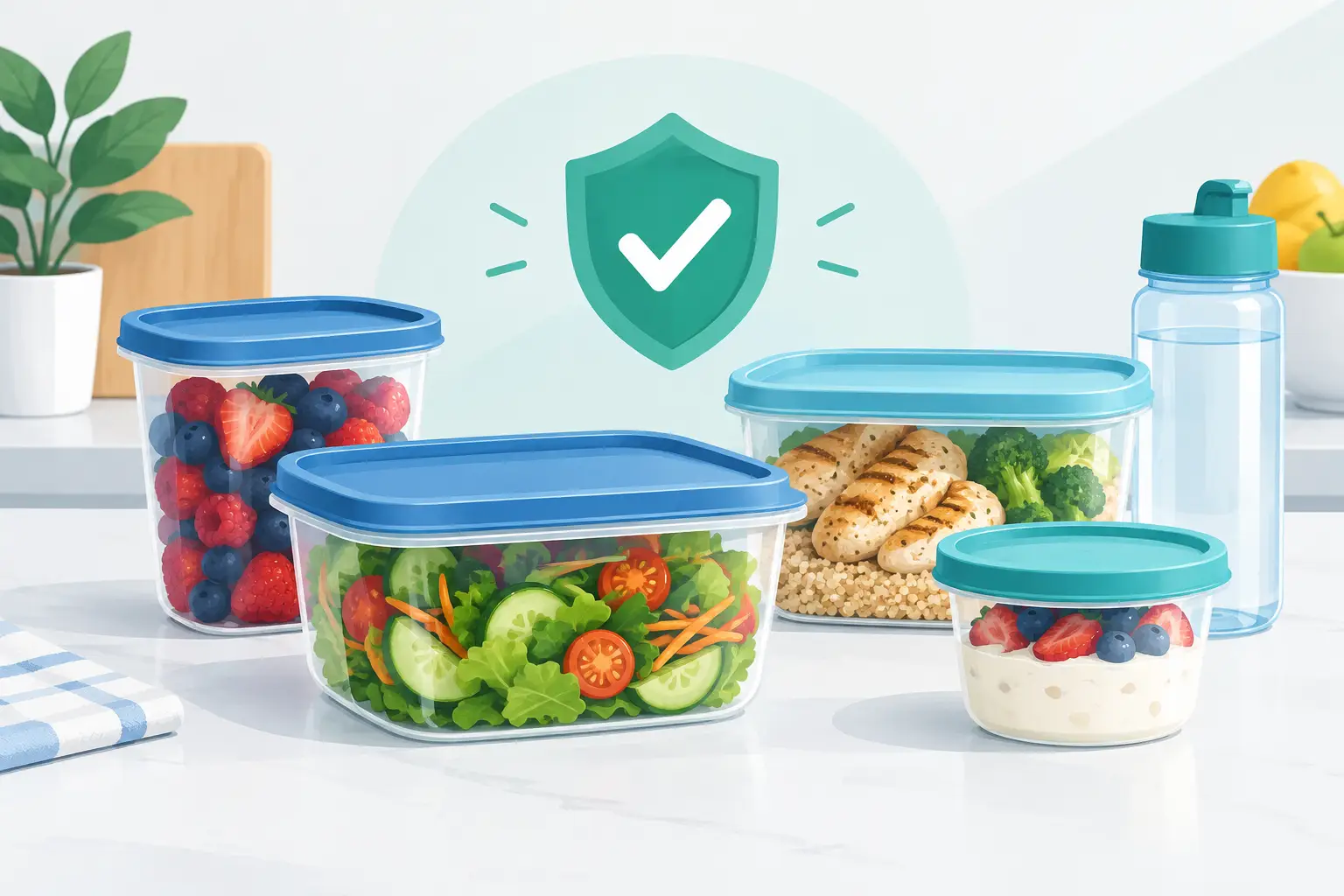
Food-contact plastics sold in the United States are evaluated for specific uses. That matters. A container made for cold food storage is not necessarily made for boiling liquids, oven heat, or repeated microwave reheating. “Food safe” does not mean “safe under every temperature, for every food, forever.” It means the material is intended to contact food under stated conditions.
Start with the container itself. If it is labeled microwave-safe, freezer-safe, or dishwasher-safe, those labels describe the uses the manufacturer designed it to handle. If there is no label, do not assume. A thin takeout tub, yogurt cup, deli container, or single-use bottle may be convenient, but it was not necessarily designed for hot leftovers or repeated cleaning cycles.
This distinction is especially relevant because plastic containers can release tiny particles as they age or experience stress. Microplastics are generally plastic particles smaller than 5 millimeters, while nanoplastics are smaller still. Researchers are continuing to study how these particles move through the body and what long-term exposure may mean. The science is still developing, but the exposure itself is not theoretical. Plastic particles have been detected in food, water, air, and human tissues.
That does not mean one meal from a plastic container determines your health. It does mean everyday habits deserve a closer look.
Heat Is the Pressure Point
High heat is one of the clearest reasons to be selective with plastic food storage. Heating can increase the movement of substances from packaging into food, particularly when the container is not meant for microwave use or has become worn. Heat can also contribute to warping, cracking, and surface breakdown.
Fatty, acidic, and very hot foods deserve extra caution. Think tomato sauce, oily curries, melted cheese, broth, and leftovers fresh from the stove. These foods can be more demanding than dry or cold foods, especially when they sit in plastic for a long time.
A microwave-safe label is useful, but it is not an invitation to treat every plastic container as a permanent cooking vessel. A practical approach is to transfer food to glass or ceramic before reheating whenever possible. If you use microwave-safe plastic, follow the manufacturer’s instructions, leave room for steam, and avoid allowing the container to contact heating elements or become visibly warped.
The same principle applies to the dishwasher. Repeated high-heat wash cycles can be hard on plastic, particularly lower-quality or older containers. Hand-washing a container that still serves a purpose may extend its useful life, but replacement is the smarter choice once the surface looks tired.
Scratches, Cloudiness, and Warping Are Signals
Plastic does not always fail dramatically. It often degrades slowly, through tiny scratches, cloudy surfaces, stubborn odors, fading, or a lid that no longer fits correctly. Those changes are not merely cosmetic. They can signal that the material has been stressed and may be more likely to shed particles.
Retire containers that are cracked, heavily scratched, warped, cloudy, brittle, or stained in a way that will not wash out. Also replace plastic that retains strong food odors. A container that has absorbed yesterday’s garlic sauce is telling you something about how its surface has changed.
Avoid harsh scouring pads and abrasive cleaners on reusable plastic. They can roughen the surface and shorten the container’s useful life. For the same reason, do not use damaged utensils or containers for food prep simply because they are still technically usable. This is a low-cost, high-control exposure reduction step.
Recycling Numbers Do Not Tell the Whole Story
The resin identification number on the bottom of a container is commonly mistaken for a safety ranking. It is not. That number primarily identifies the type of plastic for sorting and recycling systems. It does not tell you whether a specific container should be heated, reused, or used with fatty foods.
“BPA-free” also has limits as a decision-making tool. Avoiding BPA may be a personal priority, but a BPA-free label does not automatically answer every question about the container’s additives, intended use, durability, or behavior under heat. The better question is simpler: What was this item designed to do, and am I using it that way?
For everyday food storage, choose durable reusable containers from reputable manufacturers, keep them in good condition, and reserve them for uses that match their labels. For hot food and reheating, glass and ceramic are often the more straightforward choice.
A Lower-Plastic Kitchen Is Built One Habit at a Time
You do not need to throw out every plastic item in your kitchen tonight. That approach is expensive, wasteful, and difficult to sustain. Start where the payoff is highest: heat, damage, and repeated contact.
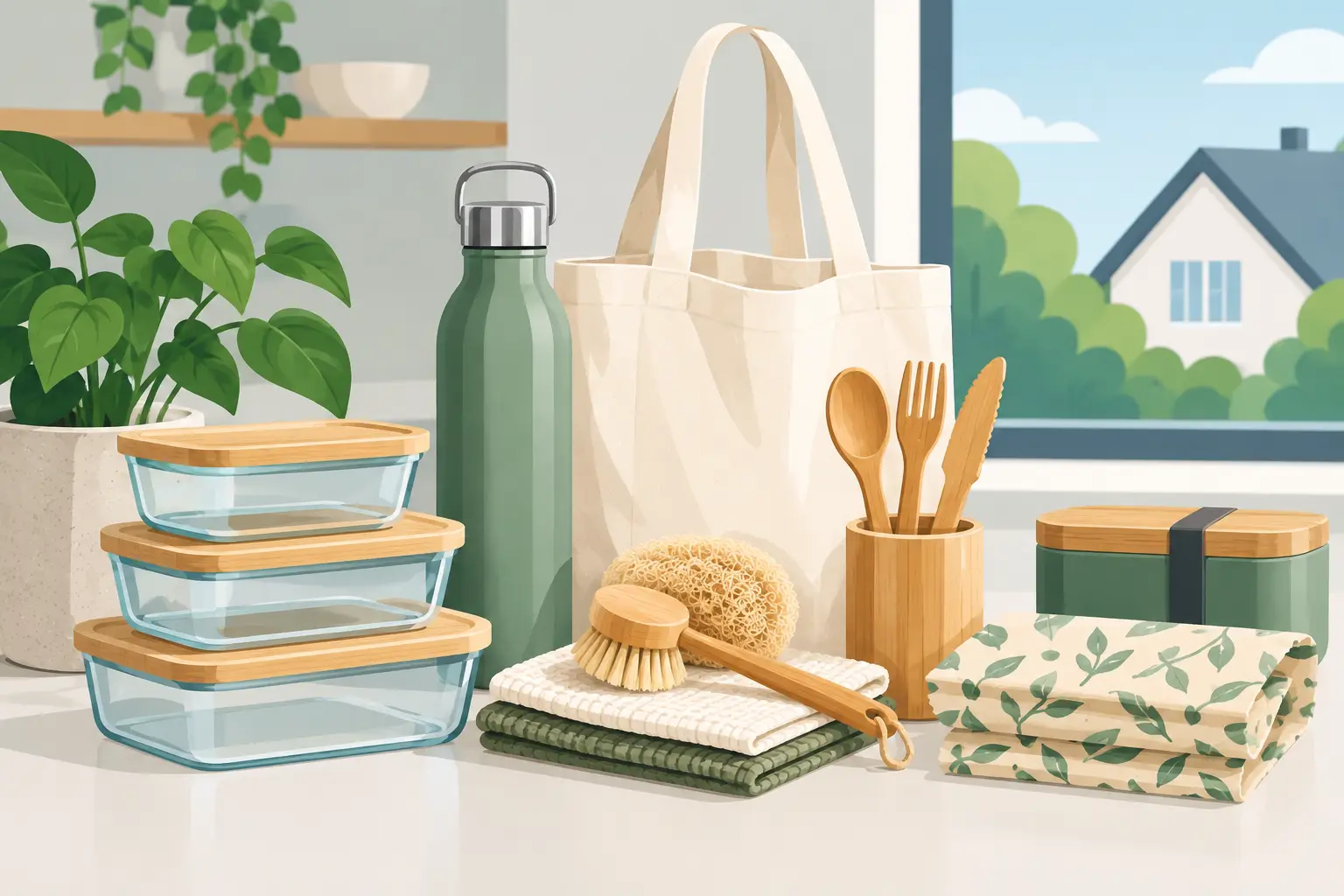
Make glass containers your default for storing hot leftovers, microwaving meals, and packing acidic or oily foods. Use plastic containers for cold, dry, or short-term storage when they are in good condition and designed for the task. Let hot food cool slightly before transferring it into plastic, rather than sealing it steaming hot.
Be equally thoughtful about the less obvious sources. Avoid leaving bottled water in a hot car. Do not pour boiling liquids into thin disposable plastic. Replace visibly worn blender cups, shaker bottles, and food-storage lids. When ordering takeout, transfer hot food out of its container if you plan to reheat it.
These choices reduce exposure opportunities without demanding an impossible plastic-free life. That matters because microplastic exposure does not come from one source. It is cumulative, woven into the air we breathe, the water we drink, and the products we use every day.
Reducing Exposure Is Only One Side of the Equation
Better container choices can lower avoidable exposure, but they cannot eliminate it. Plastics have entered modern food systems so completely that prevention alone is not a complete strategy. That is why a meaningful microplastic defense conversation must include what happens after particles are swallowed.
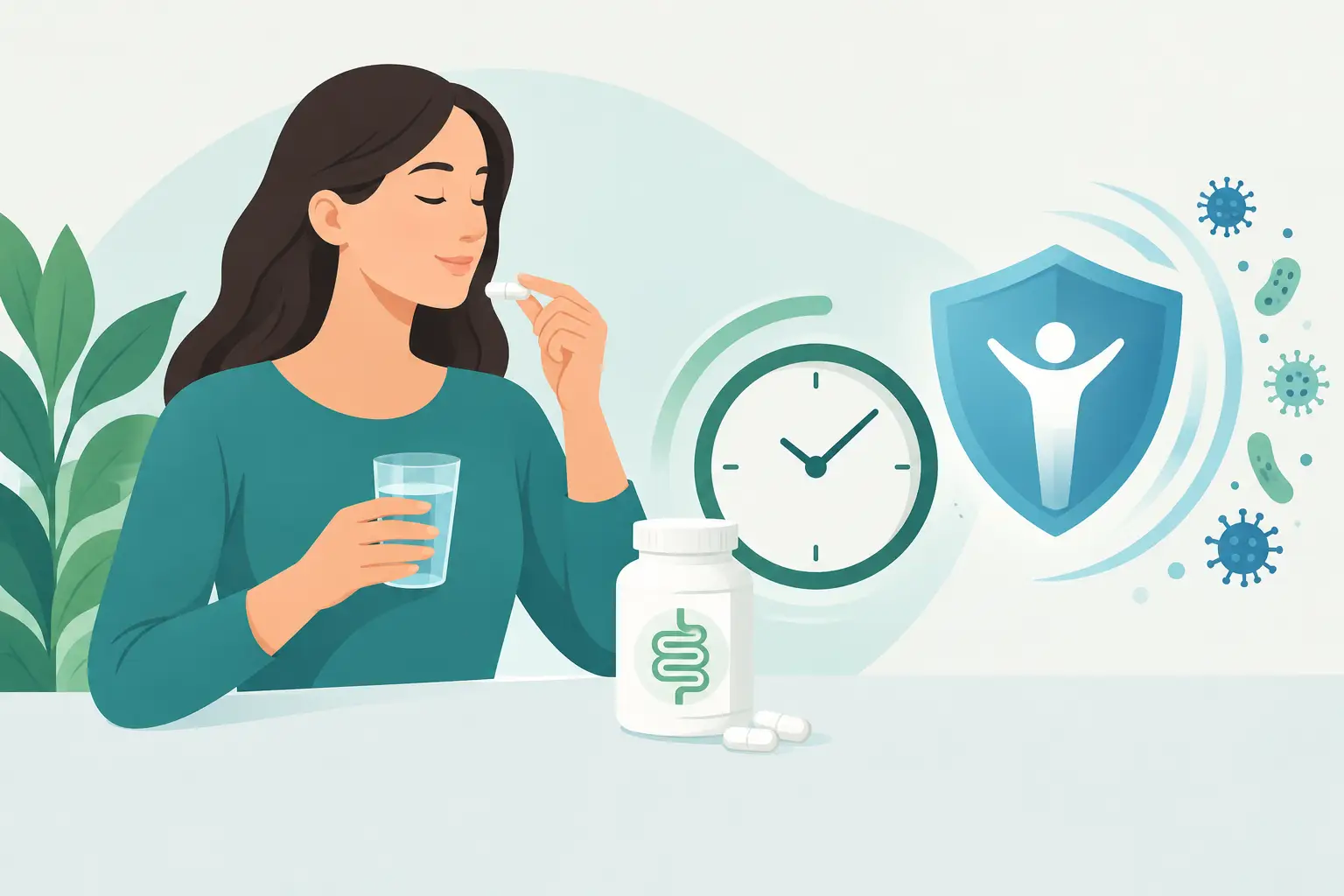
Qi601’s My Gut Guardian™ was developed as a daily digestive defense using Qi601™ Biofilm Shield™ technology. Its proprietary postbiotic/probiotic strain is designed to form an adhesive biofilm in the digestive system, acting like a magnet to trap and bind micro- and nanoplastic particles and support their normal elimination through digestion. It is a targeted response to a problem that food-storage swaps alone cannot solve.
No one can control every package, restaurant meal, or airborne particle. You can control the container you reheat in tonight, the worn plastic you finally replace, and the daily protective habits you choose to keep. Plastics do not belong in your body. Treat every practical reduction step as part of your personal defense.