Plastic exposure is not limited to water bottles and takeout containers. To reduce plastic leaching from cookware, look closely at what touches your food when heat, oil, acid, friction, and time are all working together. Your kitchen will not become plastic-free overnight, nor does it need to. The goal is to identify the highest-contact, highest-heat habits and replace them with choices that give plastic fewer opportunities to enter your meals.
For health-conscious households, that is a practical form of daily defense. Plastics do not belong in your body. While cookware is only one possible exposure source among food packaging, drinking water, household dust, and air, it is one part of the equation you can control every day.
Why Heat Changes the Plastic Exposure Equation
Plastic materials can shed or transfer particles and chemical components under certain conditions. Heat matters because it can accelerate material breakdown and migration. So can abrasion, such as scraping a worn pan with a metal utensil, and contact with oils or acidic foods, which can be more chemically aggressive than plain water.
This does not mean every plastic-handled tool or coated pan is automatically dangerous after one use. Exposure is not an all-or-nothing event. It depends on the material, the temperature, the condition of the item, how long food is in contact with it, and what you are cooking. A brand-new utensil used briefly at low heat is not the same scenario as an old, scarred plastic spatula resting in a hot skillet for 20 minutes.
The most protective approach is simple: reduce unnecessary plastic contact during high-heat cooking, and replace items that are visibly degraded. You are lowering cumulative exposure, not chasing kitchen perfection.
Start With the Cookware That Takes the Most Heat
The pans you use for searing, frying, roasting, broiling, and reheating deserve the closest attention. High heat and repeated use are where material condition becomes especially relevant.
Choose stable cooking surfaces
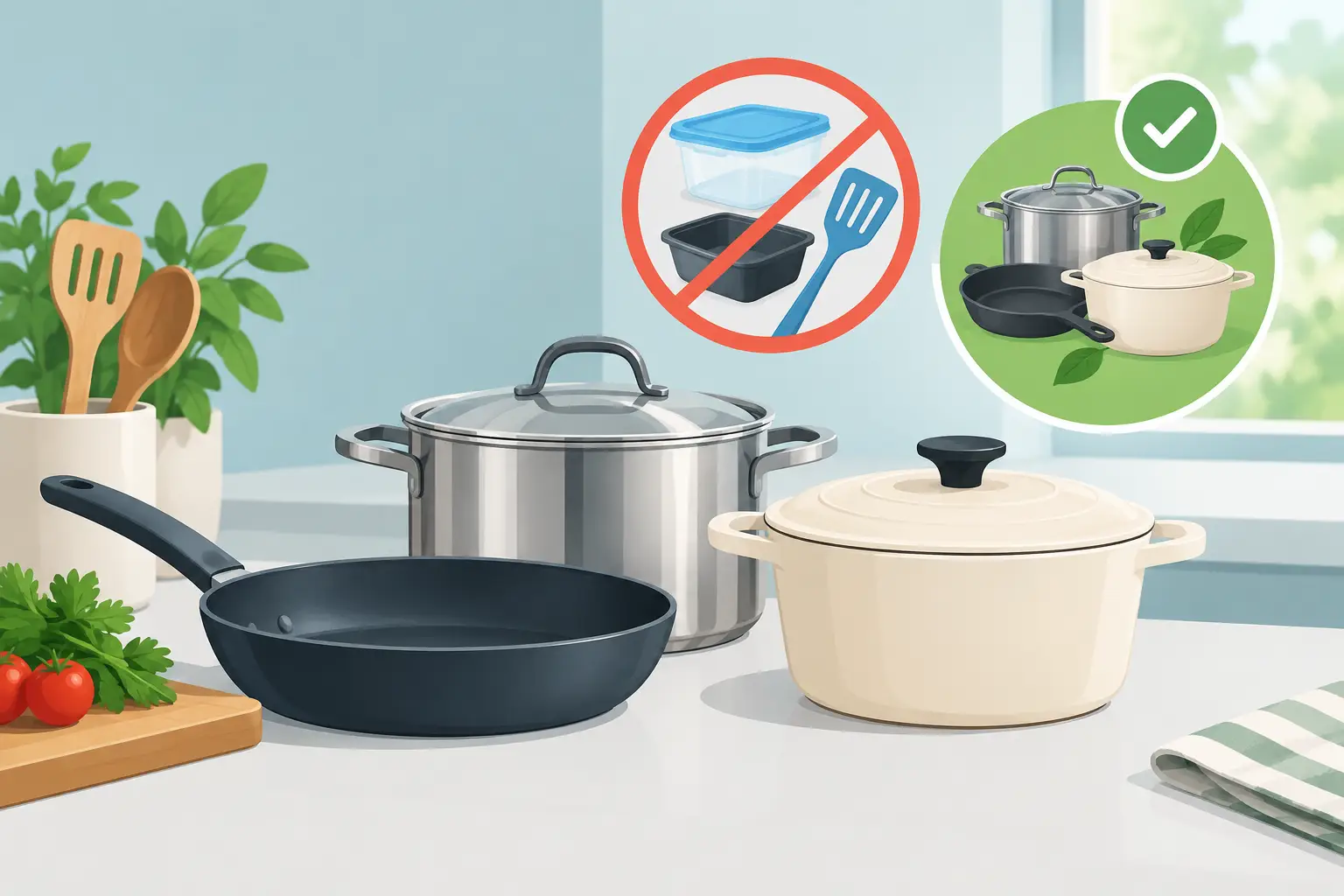
Stainless steel, cast iron, carbon steel, enameled cast iron, and glass are common options for reducing direct food contact with plastic-based kitchen materials. Each has trade-offs, but each can be a durable core choice for daily cooking.
Stainless steel is versatile, easy to maintain, and especially useful for sautéing, simmering, and acidic recipes. It can stick if the pan is not preheated or if there is too little cooking fat, but technique solves much of that learning curve. Cast iron and carbon steel become naturally more release-friendly with seasoning, although they need drying and periodic care to prevent rust. Enameled cast iron is excellent for soups, braises, and sauces, but it is heavier and should not be chipped. Glass works well for baking and food storage, though it is not designed for direct stovetop heat unless specifically labeled for it.
If you use nonstick cookware, do not panic. Instead, be intentional. Keep heat moderate, follow the manufacturer’s temperature guidance, avoid preheating an empty pan for extended periods, and retire a pan when its surface is deeply scratched, peeling, blistered, or otherwise damaged. Never use a visibly failing coating as though it were still intact.
Do not overlook lids, handles, and small appliances
Cookware is more than the pan surface. Many lids have plastic knobs. Some slow cookers, air fryers, coffee makers, blenders, rice cookers, and food processors include plastic parts that contact hot food or steam. This does not require throwing out a functional kitchen. It means using equipment according to its intended temperature range and prioritizing upgrades where hot food has prolonged contact with worn plastic.
A glass lid with a metal knob, a stainless-steel kettle, or a glass blender jar can be a meaningful next purchase if you use that appliance constantly. Frequency matters. The item you use twice a day deserves more scrutiny than the specialty tool you use twice a year.
Replace Plastic Utensils Before They Look “Bad Enough”
A spatula, spoon, ladle, or turner may spend more time in direct contact with hot food than the cookware itself. Thin plastic utensils can soften, warp, scratch, and degrade over time, particularly around the edges that sit against a hot pan.
For high-heat tasks, reach for stainless steel, wood, or high-quality silicone designed for cooking temperatures. There are trade-offs here too. Metal can scratch certain pan surfaces. Wood needs hand-washing and should be replaced if cracked or splintered. Silicone quality varies, so choose food-contact products from manufacturers that clearly state their heat limits and avoid using damaged tools.
The practical rule is not “all plastic is forbidden.” It is “do not let aged, warped, melted, or unknown plastic become a permanent ingredient in your cooking routine.” If a utensil has a sticky surface, discoloration, deep cuts, frayed edges, or an odor after heating, replace it.
Cooking Habits That Help Reduce Plastic Leaching From Cookware
Material choices matter, but habits determine how those materials perform. A few adjustments can reduce unnecessary stress on cookware without making weeknight meals complicated.
First, avoid high heat when you do not need it. Most cooking does not require a burner at its maximum setting. Preheat pans appropriately, then use the lowest heat that achieves the result you want. This protects food quality, prevents scorching, and reduces the chance of overheating coated surfaces or plastic-adjacent components.
Second, move leftovers out of hot cookware when the meal is done. Letting tomato sauce, curry, or oily foods sit for hours in a damaged pan or a plastic storage container while still steaming adds contact time. Transfer food to glass or stainless-steel containers once it is safe and practical to do so.
Third, do not microwave food under plastic wrap or in plastic containers unless the item is explicitly intended for microwave use. Even then, use glass or ceramic when convenient, especially for fatty foods, sauces, and long reheating cycles. A microwave-safe label is not a mandate to use plastic for every hot meal.
Finally, skip the metal scouring pad on coated cookware. Aggressive cleaning shortens the life of the surface. Use a soft sponge, follow care instructions, and replace cookware instead of trying to extend the life of a compromised pan.
Shop Strategically, Not Fearfully
The best kitchen reset is usually gradual. Replacing every item at once can be expensive, wasteful, and unnecessary. Begin with the items that are damaged, used at high heat, or in contact with food every day.
Focus on these priorities:
- Heavily scratched or peeling nonstick pans
- Warped, melted, or deeply cut plastic utensils
- Plastic containers used repeatedly for hot leftovers or microwaving
- Worn appliance parts that contact hot liquids, steam, or food
- Low-cost cookware with unclear materials or care instructions
When shopping, look beyond marketing labels. “Non-toxic” is broad language, not a complete material description. Look for clear information about the cooking surface, temperature limits, intended use, and care requirements. A pan is only a better choice if you can use and maintain it properly.
You also do not need to replace a reliable stainless-steel pot simply because its handle has a heat-resistant synthetic grip that does not contact food. Put your energy where exposure is most plausible: direct food contact, high temperatures, repeated use, and visible damage.
Cookware Is One Layer of a Bigger Defense
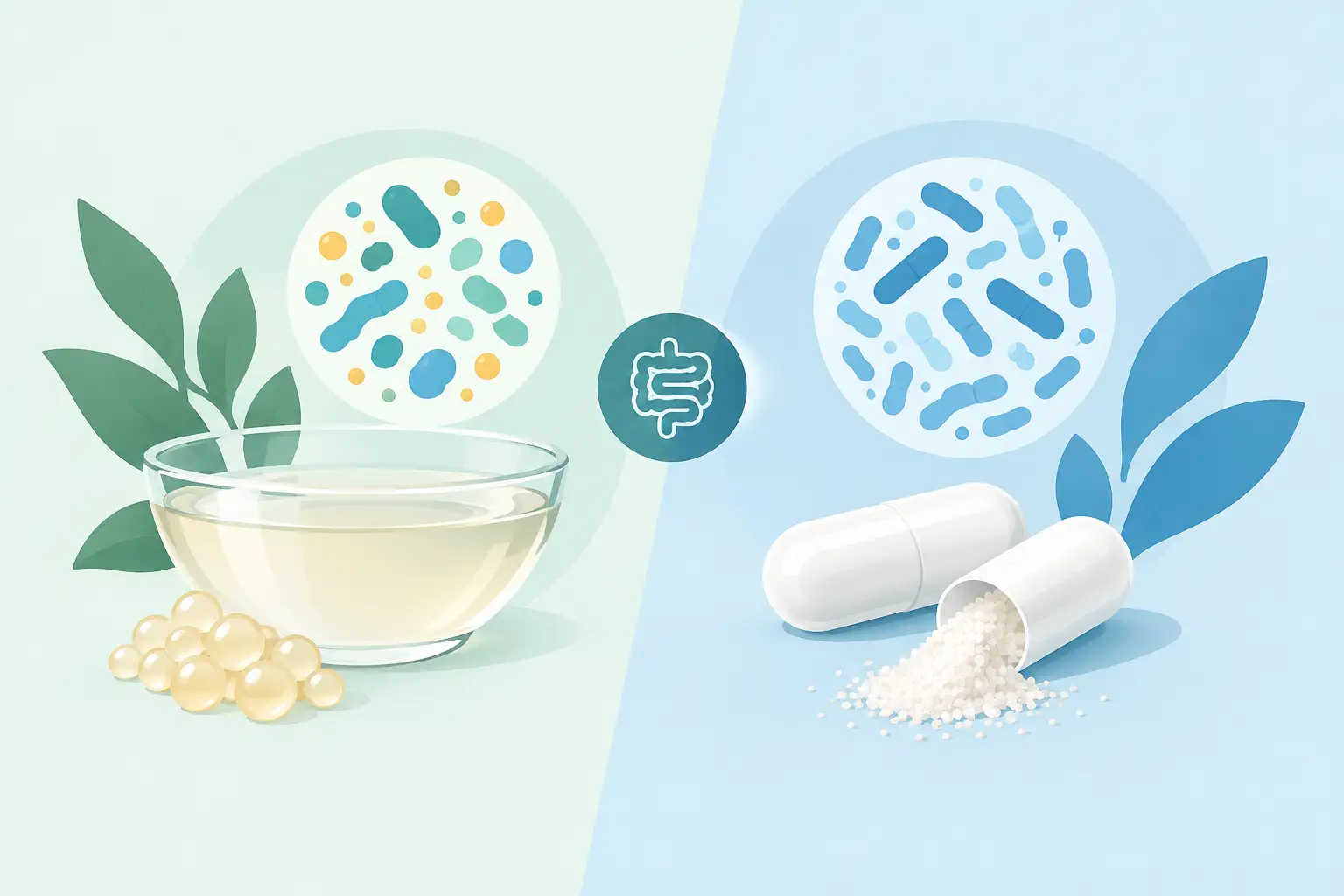
Kitchen changes can reduce one route of everyday plastic exposure, but they cannot eliminate the larger reality. Micro- and nanoplastic particles are now encountered through multiple environmental pathways. That is why prevention should be paired with support for the body’s normal digestive elimination process.
Qi601’s My Gut Guardian™ is designed as a daily microplastic defense supplement powered by Qi601™ Biofilm Shield™ technology. Its proprietary postbiotic/probiotic approach is formulated to create an adhesive biofilm in the digestive system that helps trap and bind plastic particles for normal digestive clearance. It is a practical addition for people who want more than avoidance in a world where total avoidance is unrealistic.
No capsule replaces food safety, smart cookware choices, or medical care. Dietary supplements are not intended to diagnose, treat, cure, or prevent disease. But thoughtful exposure reduction and daily digestive support can work together as part of a protective routine.
Your next meal is a useful place to start. Use the pan that is in good condition, choose the utensil built for heat, and stop asking worn plastic to do a job it was never meant to do forever.