
First-in-Human Research Exploring Protection from Microplastic Exposure
Qi601® is a novel postbiotic technology designed to create a physical binding matrix within the digestive tract. Rather than acting systemically, it is intended to intercept micro- and nanoplastics at the body’s primary points of exposure and help limit their opportunity to interact with human tissue.
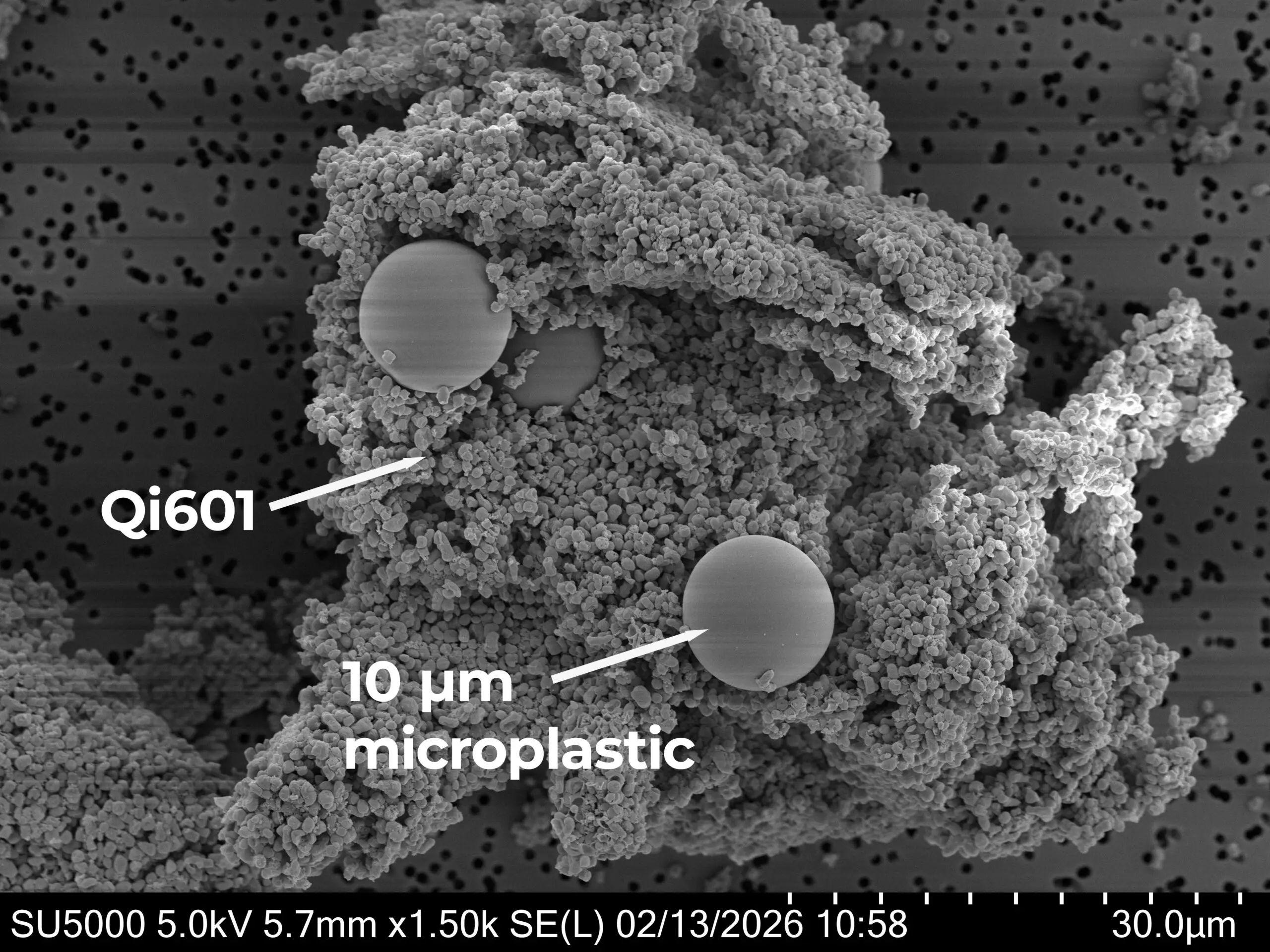
In a five-participant interventional crossover study, microscopic analysis showed that Qi601® physically associated with microplastic particles released in the mouth during gum chewing. These findings provide early human evidence that Qi601® can begin binding plastic particles at the initial point of ingestion.
Researchers then evaluated whether the binding relationship could remain intact as it moved through conditions modeled after the human digestive system. Qi601-bound nanoplastics were sequentially exposed to simulated saliva, gastric, intestinal, and colonic fluids. Approximately 98% of the nanoplastics remained within the Qi601 binding matrix compared with untreated controls, supporting the matrix’s stability throughout simulated gastrointestinal digestion.
What the Microscopic Image Shows
The scanning electron microscope image above reveals Qi601® forming small, irregular clusters with a rough, pebble-like appearance. These structures surround and bind to the smooth plastic spheres, creating a physical matrix that holds the particles in place.
Laboratory testing indicates that this binding structure remains stable through simulated digestive conditions. The image offers a close-up view of how Qi601® can capture and retain plastic particles at the microscopic and nanoscale level.
A Microbiome-Inspired First Line of Defense
The ability of micro- and nanoplastics to attach to cells may influence their opportunity for absorption. By binding these particles within the digestive tract, Qi601® is designed to reduce their contact with the intestinal surface and support their passage through the body.
This represents a different approach to microplastic defense: intercepting and containing particles before they have an opportunity to cross the body’s natural barriers.