That container of last night’s pasta may look harmless, but leftovers sit against their packaging for hours or days. Heat, fat, acidity, and repeated wear can all make food-contact plastic a weak point in an otherwise thoughtful kitchen routine. Learning how to store leftovers without plastic is a practical way to reduce one repeat source of exposure – without wasting food or turning meal prep into a daily battle.
Plastic is difficult to avoid completely. It is in food packaging, takeout containers, appliances, water systems, and the surrounding environment. The goal is not perfection. It is reducing unnecessary contact where you have the most control: the food you prepare, save, refrigerate, and reheat at home.
Why leftovers deserve a closer look
Leftovers are different from food that passes briefly through a package. They often spend extended time in contact with a container, then may be reheated in that same container. Add tomato sauce, oily vegetables, curry, soup, or a hot meal placed directly into storage, and the conditions become more demanding.
Not every plastic container poses the same concern, and no household change can eliminate microplastic exposure. But worn plastic, single-use takeout packaging, and heating food in plastic are sensible places to intervene. A safer storage habit also tends to improve food quality: glass and stainless steel resist stains, odors, and the lingering flavors that make yesterday’s meal less appealing.
This is exposure reduction, not fear. You do not need to throw out a full pantry overnight. Start with the containers that touch hot food most often.
The best containers to store leftovers without plastic
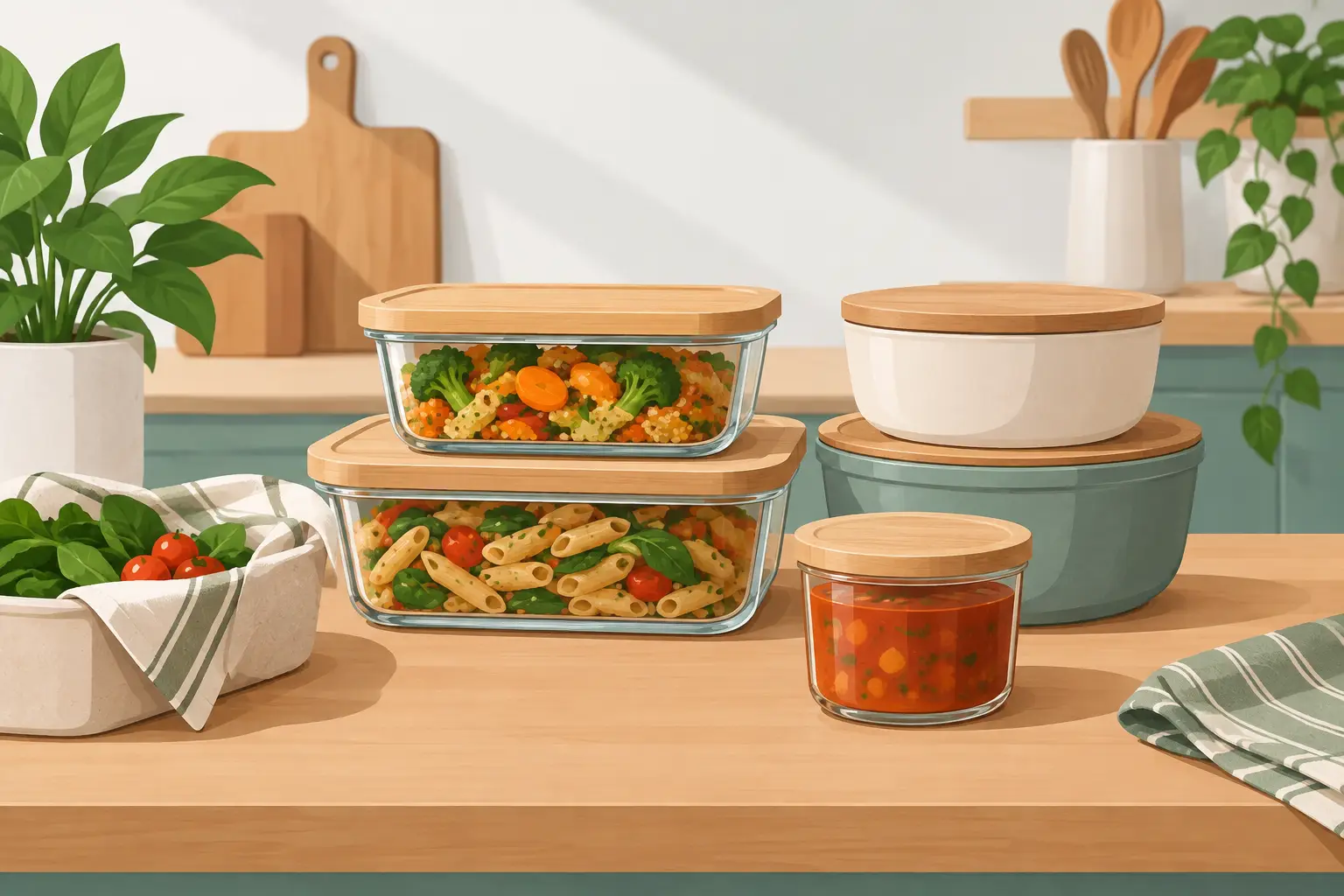
For refrigerated leftovers, glass is the strongest all-around option. Tempered glass containers are nonporous, easy to see through, and suitable for foods ranging from acidic marinara to oily roasted vegetables. Look for containers with secure-fitting lids and a shape that stacks efficiently in your refrigerator. A container that is awkward to use will not become a lasting habit.
Stainless steel is another dependable choice, particularly for lunch portions, grains, chopped produce, and dry foods. It is lightweight, durable, and nearly impossible to shatter. The trade-off is visibility – you cannot identify the contents at a glance – and most stainless containers should not go in the microwave. A strip of paper tape marked with the meal and date solves the first problem quickly.
For soups, sauces, and freezer portions, wide-mouth glass jars can work well if they are designed for freezing and you leave adequate headspace. Liquids expand as they freeze. Filling a jar to the top is a recipe for broken glass and wasted food, not a cleaner kitchen.
Silicone bags and lids can be useful when glass or steel is impractical. They are flexible, reusable, and particularly helpful for odd-shaped foods or limited refrigerator space. Still, silicone is not identical to glass or steel. If your priority is reducing food contact with synthetic materials as much as possible, reserve silicone for occasional use and choose glass or stainless steel for everyday storage.
Cool food before you cover and chill it
One of the simplest habits is also one of the most overlooked: do not seal steaming food in a plastic container. Let cooked food cool briefly in the pot, pan, or a glass serving dish before transferring it to storage. The goal is to avoid trapping intense heat against a plastic surface.
Food safety matters here. Perishable food should not stay at room temperature for more than two hours, or one hour when temperatures are above 90°F. Divide large batches into smaller, shallow glass or stainless containers so they cool more quickly, then refrigerate them promptly. This protects against bacterial growth while making it easier to avoid putting a scorching meal into storage.
If you only have plastic containers available, let food cool first, use containers that are undamaged, and do not microwave or pour boiling liquids into them. That is not the ideal long-term solution, but it is a meaningful improvement over treating every container as interchangeable.
Give hot, fatty, and acidic foods first priority
You do not need to replace every plastic item at once. Begin with the meals most likely to sit hot or warm against their container: soups, chili, stews, tomato-based dishes, curries, greasy takeout, and oil-rich leftovers. These are the meals most worth moving into glass or stainless steel immediately.
Also replace containers that look cloudy, scratched, warped, stained, or carry odors that never fully wash out. Damage is a clear sign that a container has reached the end of its useful life for food storage. Repurpose it for non-food organizing if appropriate, or follow local disposal guidance.
Reheat the meal, not the plastic
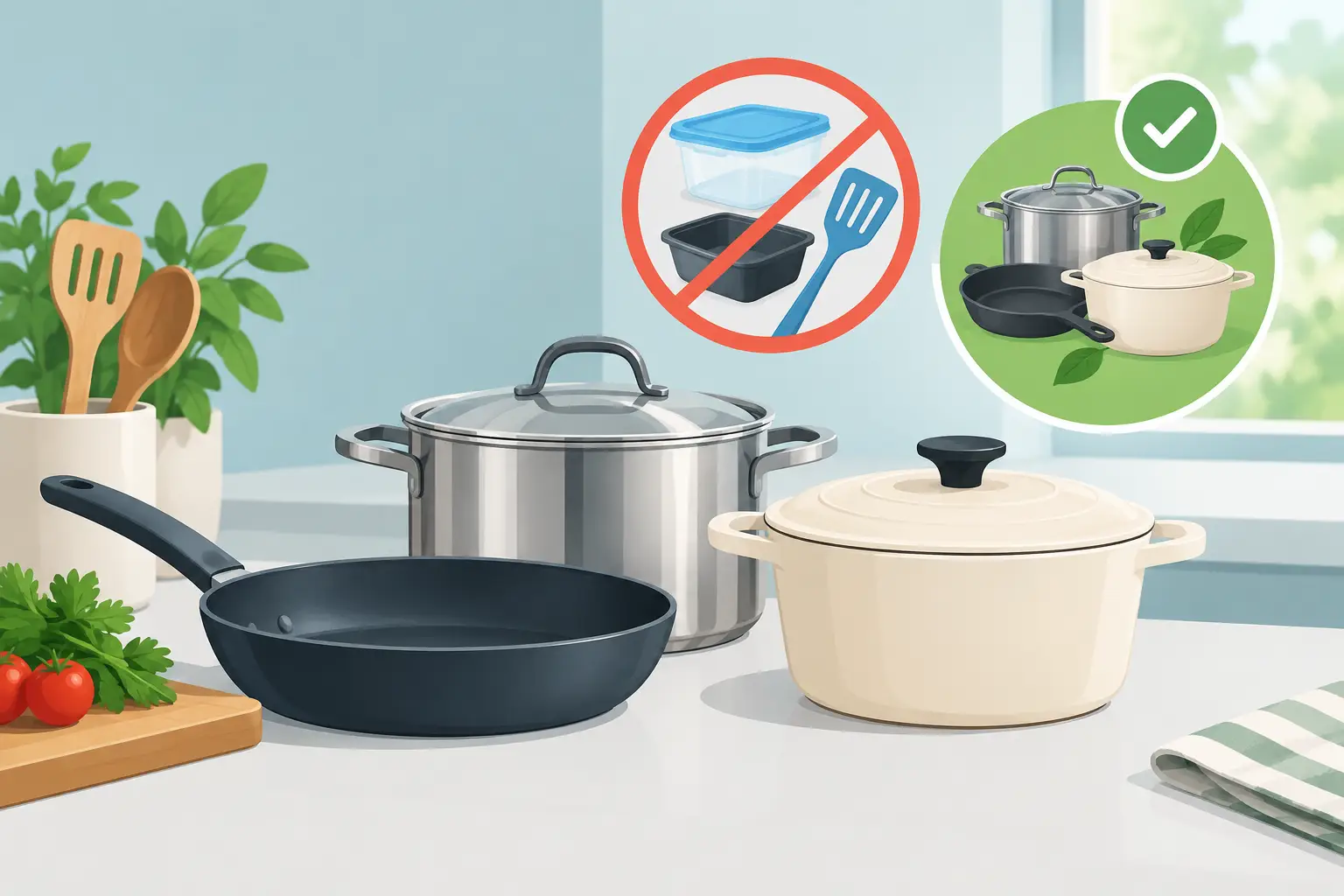
Storage is only half the equation. A glass container can reduce contact in the refrigerator, but reheating a meal in a thin takeout tub reverses much of that progress. Transfer leftovers to a ceramic plate, a heat-safe glass dish, stainless steel pan, or the original cooking pot before heating.
Microwave-safe does not necessarily mean exposure-free. It generally means the product is designed not to melt or break down under specified microwave conditions. It is not a reason to make plastic your default heating surface, especially when food is fatty, acidic, or piping hot.
For microwave reheating, use a ceramic or glass cover rather than plastic wrap. On the stovetop, reheat in stainless steel, cast iron, or another appropriate pan. In the oven, use oven-safe glass or ceramic and follow the manufacturer’s temperature guidance. Avoid dramatic temperature shifts with glass, such as moving a frozen container directly into a very hot oven, because thermal shock can cause it to crack.
Make the switch without buying a new kitchen
A plastic-free leftover system does not require twenty matching containers. It requires a small, repeatable setup that fits the meals you actually eat. Start with a few medium glass containers for dinner portions, two larger containers for batch cooking, and several small jars or dishes for sauces, snacks, and chopped ingredients.
Choose shapes based on your habits. Rectangular containers stack efficiently for meal prep. Round containers are easier for soups and may fit better in a crowded refrigerator. Containers with glass bases and plastic lids are still a worthwhile step because the food rests against glass during storage, but avoid placing the lid directly on hot food or microwaving it unless the manufacturer specifically allows it.
Use a simple first-in, first-out routine. Label leftovers with the date, place older meals toward the front, and plan one leftover lunch or dinner before cooking another large batch. Less forgotten food means fewer containers needed, less waste, and fewer emergency takeout meals packed in disposable plastic.
A protective routine beyond the refrigerator
Reducing food-contact plastic is one layer of a larger exposure strategy. Use glass or stainless steel for water when practical, move hot beverages out of disposable cups, and favor fresh or minimally packaged foods when it fits your budget and schedule. Small, repeated choices carry more weight than an occasional perfect day.
Because environmental plastic exposure cannot be fully avoided, some people also want support that goes beyond avoidance. Qi601’s My Gut Guardian™ is formulated to support the normal digestive elimination of micro- and nanoplastic particles through its proprietary Biofilm Shield™ technology. It is designed as a daily defense, not as permission to ignore the sources you can control.
Your next meal is a useful place to begin. Put the leftovers in a container that protects the food, label it, and make room for it where you can see it. That one ordinary kitchen decision is a quiet way to put more control back on your plate.