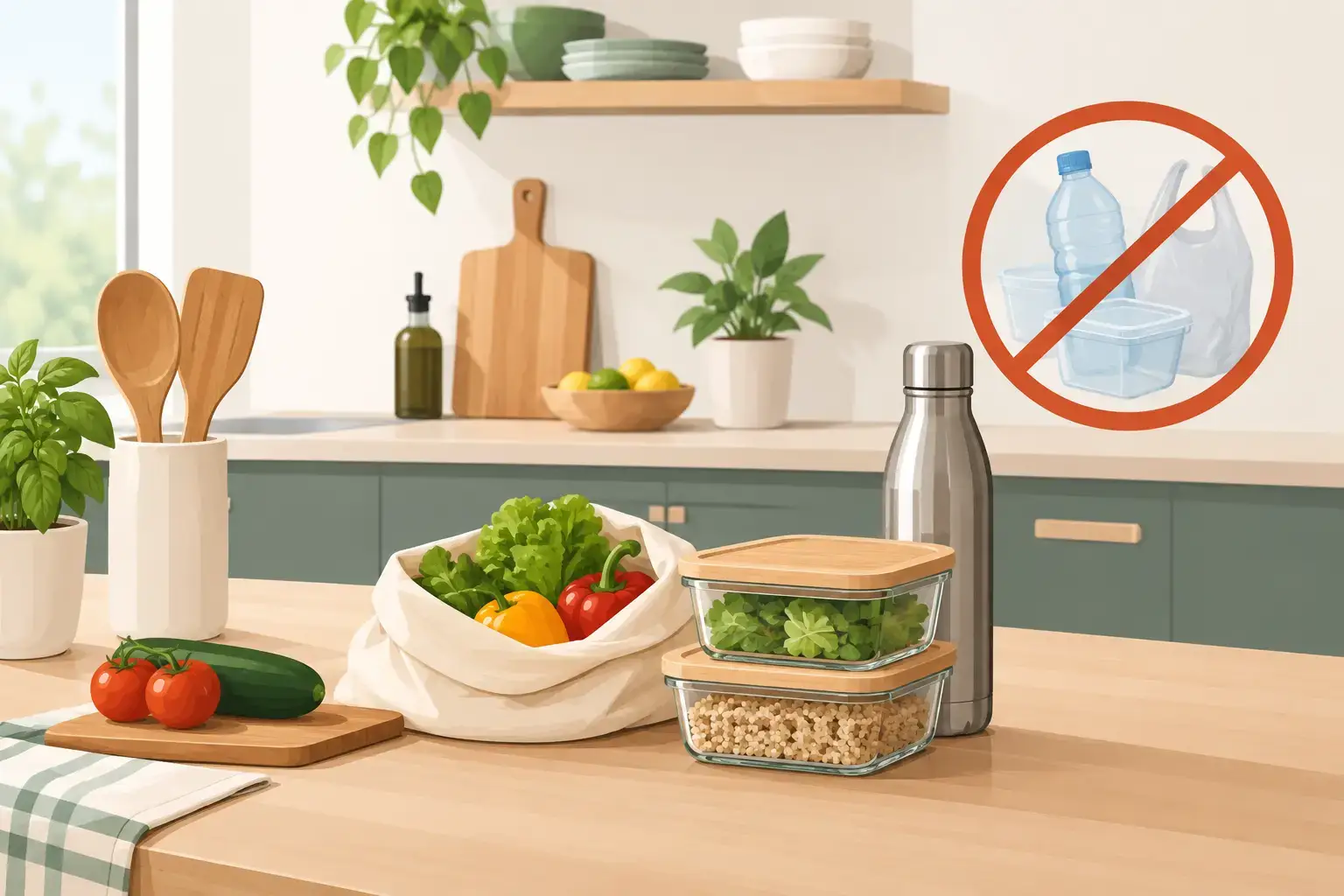
A hot leftover meal in a thin plastic container is not just a convenience decision. Heat, time, friction, and repeated washing can all increase the opportunity for tiny plastic particles to move from packaging and kitchen tools into food. You cannot eliminate every source, but you can reduce plastic exposure in kitchens by changing the moments that matter most.
That distinction is worth making. Plastic is woven into modern food systems, from grocery packaging to takeout containers and appliance components. The goal is not perfection or panic. It is a protective routine that lowers avoidable contact day after day, especially around heat and food storage.
Start With the Highest-Impact Kitchen Habits
Not every plastic item deserves the same level of concern. A sealed bag of dry rice stored briefly in a pantry is different from a scratched plastic container holding acidic tomato sauce in a microwave. Focus first on situations where plastic meets heat, fat, acid, abrasion, or long storage time.
Keep plastic out of the microwave
Microwaving food in plastic is one of the simplest habits to replace. Transfer leftovers to glass or ceramic before reheating, even when a container is labeled microwave-safe. That label generally addresses whether the container can tolerate microwave use under specified conditions. It does not mean the material is entirely inactive or that it cannot shed particles over time.
Use a glass plate, ceramic bowl, or microwave-safe glass container with a loose-fitting glass or ceramic cover. Avoid plastic wrap touching food, particularly hot or oily food. A paper towel is not automatically a better choice if it contains coatings or additives, so a reusable cover designed for glassware can be a practical option.
Do not pour heat into plastic
Hot liquids and foods deserve special attention because they contact every surface they touch. Let soup, coffee, broth, pasta, or cooking oil cool slightly before transferring it to a storage container. When possible, choose stainless steel, glass, or ceramic for hot food preparation and storage.
This matters for everyday rituals too. If you brew coffee through a plastic pod system or steep boiling water in a plastic infuser, consider a stainless steel French press, a glass pour-over brewer, or a ceramic tea pot. The best replacement is the one you will actually use every morning.
Retire worn plastic, not just broken plastic
A deeply scratched cutting board, cloudy deli tub, warped food container, or peeling nonstick utensil has endured stress. Repeated dishwashing, cutting, heating, and scrubbing can roughen surfaces and increase wear. Replace visibly damaged items instead of extending their life indefinitely.
You do not need to throw out a whole kitchen in one weekend. Start with the items that touch food most often: old storage containers, black plastic spatulas, plastic cutting boards with deep grooves, and reusable bottles that have become scratched or difficult to clean.
Build a Lower-Plastic Kitchen One Zone at a Time
The fastest way to lose momentum is trying to replace everything at once. A more effective approach is to work through the kitchen by function: storage, preparation, cooking, and drinking water. This makes each change easier to sustain.
Upgrade food storage first
Glass containers with durable lids are a strong everyday choice for leftovers, prepared lunches, chopped produce, and pantry staples. They are easy to clean, do not stain like many plastics, and can move from refrigerator to microwave when the manufacturer’s instructions allow it.
Stainless steel containers work well for lunches, dry foods, and cold storage. They are lighter than glass and highly durable, though they are not microwave-safe. For flexible storage, silicone bags can be useful, but quality varies. Choose food-grade products from transparent manufacturers, and avoid using flexible materials for very hot foods unless their instructions specifically support it.
For pantry staples, glass jars can replace many single-use bags and tubs. Beans, oats, nuts, flour, and snacks are good candidates. This will not erase the packaging used before the food reached your home, but it reduces prolonged contact in your kitchen and makes meal prep easier to see and organize.
Rethink cutting boards and utensils
Plastic cutting boards are common because they are inexpensive and dishwasher-friendly, but knife use creates visible wear. A well-maintained hardwood cutting board is a practical alternative for many households. Choose a board that is large enough for regular use, clean it promptly, and follow care instructions to prevent cracking.
For spatulas, spoons, turners, and ladles, look to stainless steel, wood, or high-quality silicone. Wood works especially well for stirring and serving. Stainless steel is durable and easy to sanitize. Silicone can be useful around nonstick cookware, but avoid low-quality items with a strong odor or a tacky surface.
The trade-off is real: wood takes more care, glass can break, and stainless steel may not suit every pan. The point is not to make every material vanish. It is to reduce routine contact with worn, heated plastic where alternatives are straightforward.
Filter drinking and cooking water thoughtfully
Water is another daily route of potential microplastic exposure. A filter may help reduce certain contaminants, but filters vary widely in what they are designed to address. Read the product specifications, replace cartridges on schedule, and clean pitchers, dispensers, and reusable bottles regularly.
If you rely on bottled water, switching to filtered tap water stored in glass or stainless steel may reduce the number of plastic containers moving through your day. It can also reduce cost and household waste. Local water quality, plumbing, and your budget will shape the best choice, so treat filtration as a personal decision rather than a one-size-fits-all rule.
Grocery Choices Can Reduce Plastic Exposure in Kitchens
Kitchen exposure often begins before food reaches the counter. Whenever practical, choose whole foods with minimal packaging, produce sold loose, items packed in glass, and larger formats that use less packaging per serving. Farmers markets, bulk bins, and refill stores can help, but they are not the only path.
Frozen produce is a useful example of balance. It often comes in plastic, yet it can reduce food waste and makes nutritious meals more accessible. If frozen vegetables help your household cook more often, use them. Transfer the food to a glass or stainless steel bowl before heating rather than cooking it in the bag.
Takeout also calls for realism. You may not be able to control the container a restaurant uses. When you can, move the meal out of plastic promptly after arriving home, avoid reheating it in the original container, and use your own glass container for leftovers. Small decisions repeated over years are more meaningful than an occasional perfect purchase.
A Daily Defense Requires More Than a Perfect Kitchen
Reducing contact at home is a powerful step, but microplastics do not stop at the kitchen door. They may be present in food, water, air, packaging, and the wider environment. That is why exposure reduction and digestive support can work as complementary strategies rather than competing ones.
Qi601’s My Gut Guardian is formulated around Biofilm Shield technology, designed to support the normal digestive elimination of micro- and nanoplastic particles. It is not a substitute for food safety, balanced nutrition, or practical exposure reduction. It is a daily layer of support for people who understand that avoiding every plastic particle is not realistic.
Supplement statements have not been evaluated by the Food and Drug Administration. This product is not intended to diagnose, treat, cure, or prevent any disease. If you are pregnant, nursing, taking medication, or managing a health condition, speak with a qualified healthcare professional before starting a new supplement.
Make the Next Change the Easy One
Start with one habit you can repeat without friction: reheat leftovers in glass, replace a scratched food container, bring home a stainless steel water bottle, or move hot coffee away from plastic. Then build from there.
Your kitchen does not need to be flawless to become more protective. Each time you choose less heat, less wear, and less plastic contact around your food, you create a calmer, cleaner daily defense for the people at your table.