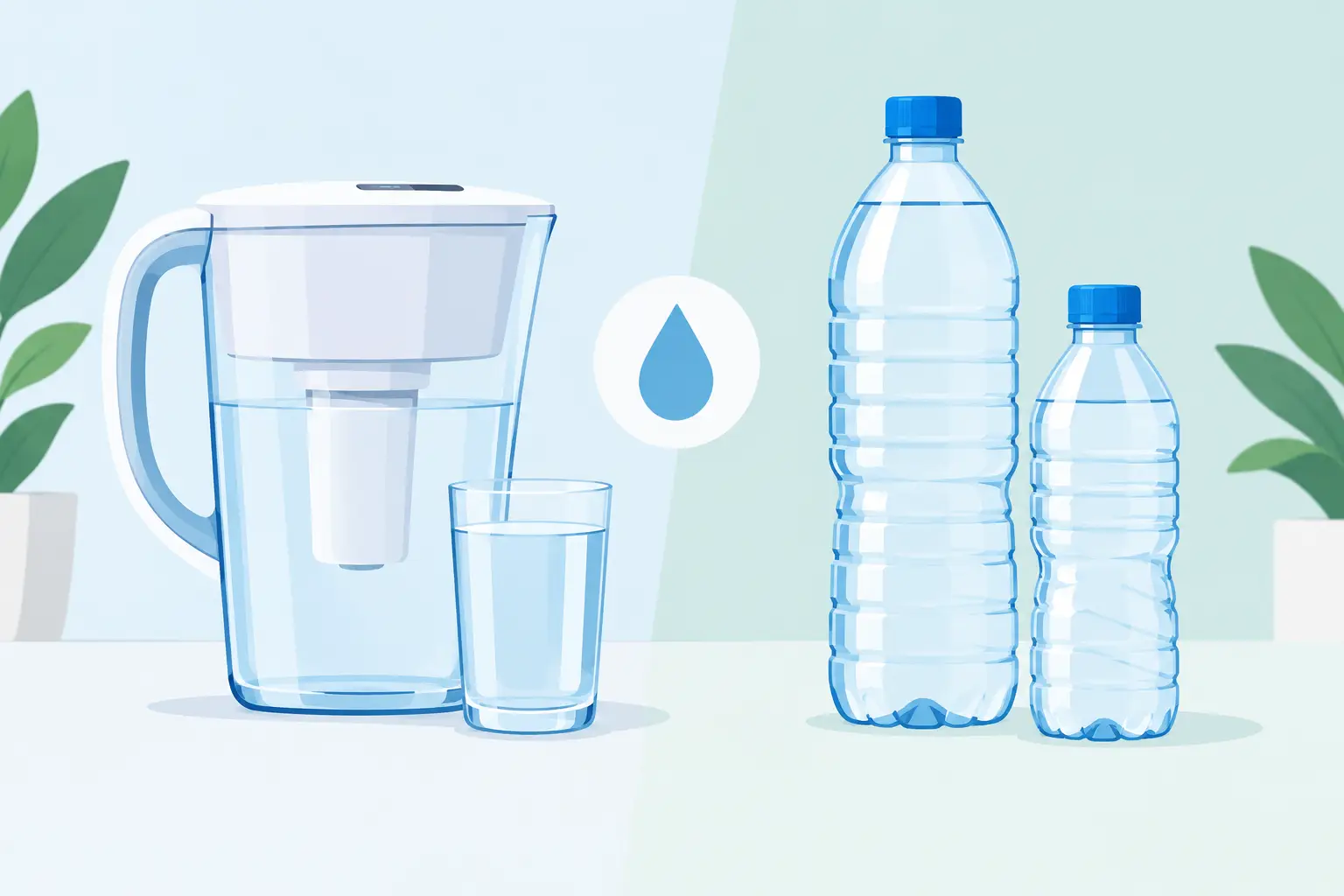
A bottle of water can feel like the cleanest choice in the room. It is sealed, labeled, portable, and marketed with images of mountain springs and pure hydration. But filtered water versus bottled water is not really a contest between convenience and cleanliness. It is a question of what is in the water, what the packaging may add, and which daily habit gives you more control over your exposure.
For people already paying attention to microplastics, the answer is rarely as simple as grabbing the bottle with the most reassuring label. Water is essential. Plastic exposure is widespread. The practical goal is not perfection – it is reducing avoidable exposure while maintaining a hydration routine you can sustain.
Filtered Water Versus Bottled Water: The Core Difference
The biggest difference is control. With bottled water, the producer chooses the source, treatment method, storage conditions, package, and distribution chain. With filtered water, you can learn what is in your local supply and select a filtration system designed for the concerns that matter in your home.
That does not mean every filtered-water pitcher is automatically superior to every bottled-water brand. A basic filter may improve taste by reducing chlorine, yet do little for other contaminants. A neglected filter can also become less effective over time. On the other side, bottled water may be treated using sophisticated methods, but the consumer often has limited visibility into the exact process and little ability to verify conditions after the bottle leaves the plant.
Many bottled waters are also sourced from municipal water systems before being purified and packaged. The label may emphasize a pristine origin, but the meaningful questions are still the same: What was removed? What remains? What did the water contact before it reached you?
The Plastic Exposure Question
Single-use plastic bottles create an obvious concern because water sits in plastic from filling through transport, warehousing, retail display, and storage at home. Heat, sunlight, time, and physical stress can all influence the materials that interact with the water. Reusing a disposable bottle, especially after it has been heated or visibly worn, is not a protective habit.
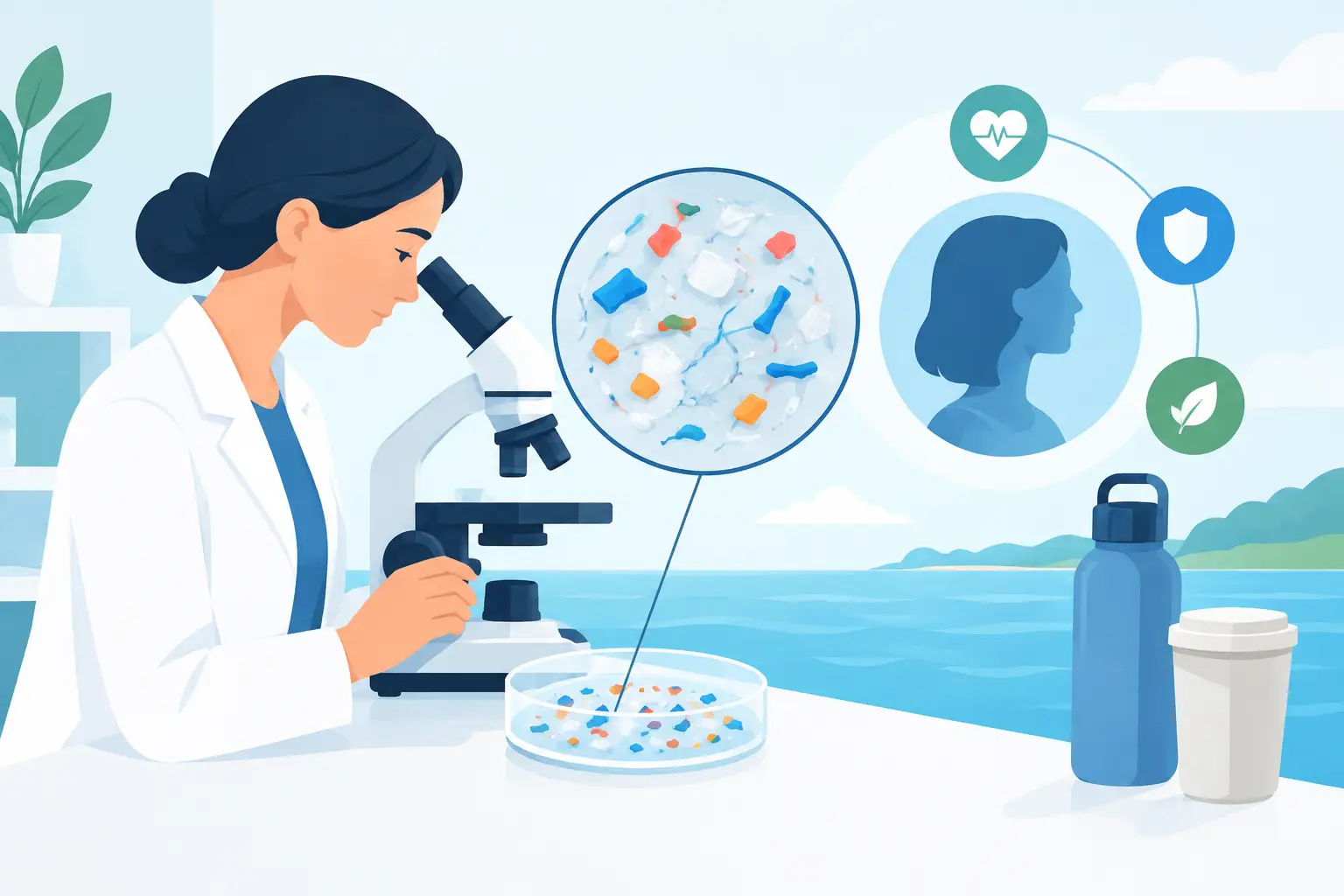
Research has found microplastic particles in bottled water, as well as in tap water and many other parts of the food supply. That matters because bottled water is often chosen specifically to avoid contaminants. A sealed bottle is not a force field against plastic particles.
Filtered tap water served from a stainless steel or glass container can remove one unnecessary source of recurring plastic contact: the disposable bottle itself. This does not make the water completely plastic-free. Home plumbing, filter housings, food packaging, air, and other daily sources still matter. It does, however, give you a straightforward opportunity to reduce a frequent exposure pathway without giving up hydration.
Glass bottles can lower contact with the plastic body of a typical disposable bottle, but they are not automatically a complete answer. Many have plastic caps, liners, or other components. They may also be heavier, more expensive, and less practical for everyday use. The right choice depends on whether you will actually use it consistently.
What a Water Filter Can – and Cannot – Do
Water filters are not interchangeable. Their performance depends on the technology, the condition of the filter, the quality of your incoming water, and whether the unit has been independently certified for the contaminant you want to address.
Activated carbon filters are common in pitchers, faucet attachments, and refrigerator dispensers. They can be useful for improving taste and reducing chlorine and certain compounds, depending on the specific product. They are often a sensible entry point for households focused on better-tasting drinking water and less reliance on bottled water.
Reverse osmosis systems use a membrane to reduce a broader range of dissolved substances. They can be a stronger option where water testing identifies specific concerns, but they require installation, maintenance, and produce wastewater during filtration. Some people also prefer to consider mineral content and taste after treatment.
Whole-home systems address water before it reaches faucets and appliances, while countertop and under-sink units focus on drinking and cooking water. Neither approach is universally best. If your main priority is the water you drink, a high-quality point-of-use system may be the more focused investment. If your concern extends to showering, laundry, and plumbing, a whole-home conversation may make more sense.
No filter should be assumed to remove microplastics or other contaminants without evidence for that specific model and use case. Look beyond broad phrases such as “pure” or “clean.” Review what the system is certified to reduce, replace cartridges on schedule, and follow installation instructions. A filter is only protective when it is maintained.
Start With Your Actual Water, Not Fear Marketing
Municipal tap water in the United States is generally regulated under a different framework than bottled water. Public water utilities are required to provide consumer confidence reports that describe detected contaminants and compliance information. Those reports are a useful starting point, but they do not replace the value of testing water at your own tap.
Your home has variables a citywide report cannot fully capture: older pipes, plumbing fixtures, a private well, building water storage, and local construction work can all affect what reaches your glass. A certified laboratory test can be especially worthwhile if you use well water, live in an older home, notice changes in taste or color, or have a known local water issue.
This is the protective approach: identify, verify, then act. Do not buy an expensive filtration system because a dramatic label triggered alarm. Buy one because its capabilities match your water, your household, and the exposure reduction you are trying to achieve.
Cost, Convenience, and the Habit That Lasts
Bottled water is convenient during travel, emergencies, and situations where a reliable refill source is unavailable. Keeping a small emergency supply is reasonable. It may also be the safer short-term option when local authorities issue a drinking-water advisory.
As an everyday default, though, bottled water can become expensive fast. The cost is not just the price at checkout. It includes trips to the store, storage space, the constant supply of containers, and disposal or recycling. Recycling is valuable, but it does not erase the material and energy required to make, transport, and process single-use bottles.
A home filtration setup requires an upfront purchase and ongoing replacement filters. Over time, it is often easier to budget for than repeated cases of bottled water. More importantly, it turns better hydration into a repeatable system: fill a durable bottle before work, keep filtered water within reach, and refresh it throughout the day.
The best option is the one that removes friction. A filter that sits unused under the sink is not more protective than a simple countertop system you refill every morning. A reusable bottle left in a hot car for weeks is not the same as a clean stainless steel bottle filled with fresh filtered water.
A More Protective Daily Water Routine
If you want to reduce dependence on bottled water without overcomplicating your life, begin with your most frequent drinking source. Review your local water report, consider testing at the tap, and select a filter that addresses verified needs. Keep replacement dates visible on your calendar, and use a durable bottle made for repeated use.
When you do buy bottled water, avoid leaving it in heat or direct sun for prolonged periods. Choose it strategically – for travel, emergencies, or temporary access issues – rather than treating it as proof of purity. Store it properly, and do not assume that an expensive package is a cleaner package.
Water is only one route of microplastic exposure. Particles have been detected across food, beverages, air, and consumer products. That is why a realistic exposure-reduction plan pairs practical choices, such as improving your water routine, with daily support for what your body encounters anyway. Qi601’s My Gut Guardian™ is designed as a daily digestive defense that supports the normal elimination of micro- and nanoplastic particles through its proprietary Biofilm Shield™ approach.
You do not need to eliminate every plastic-containing item from your life to take meaningful action. Start with the glass you fill most often. A well-maintained filter, a reusable bottle, and a clear view of your own water quality can turn hydration from a passive habit into one more layer of personal protection.