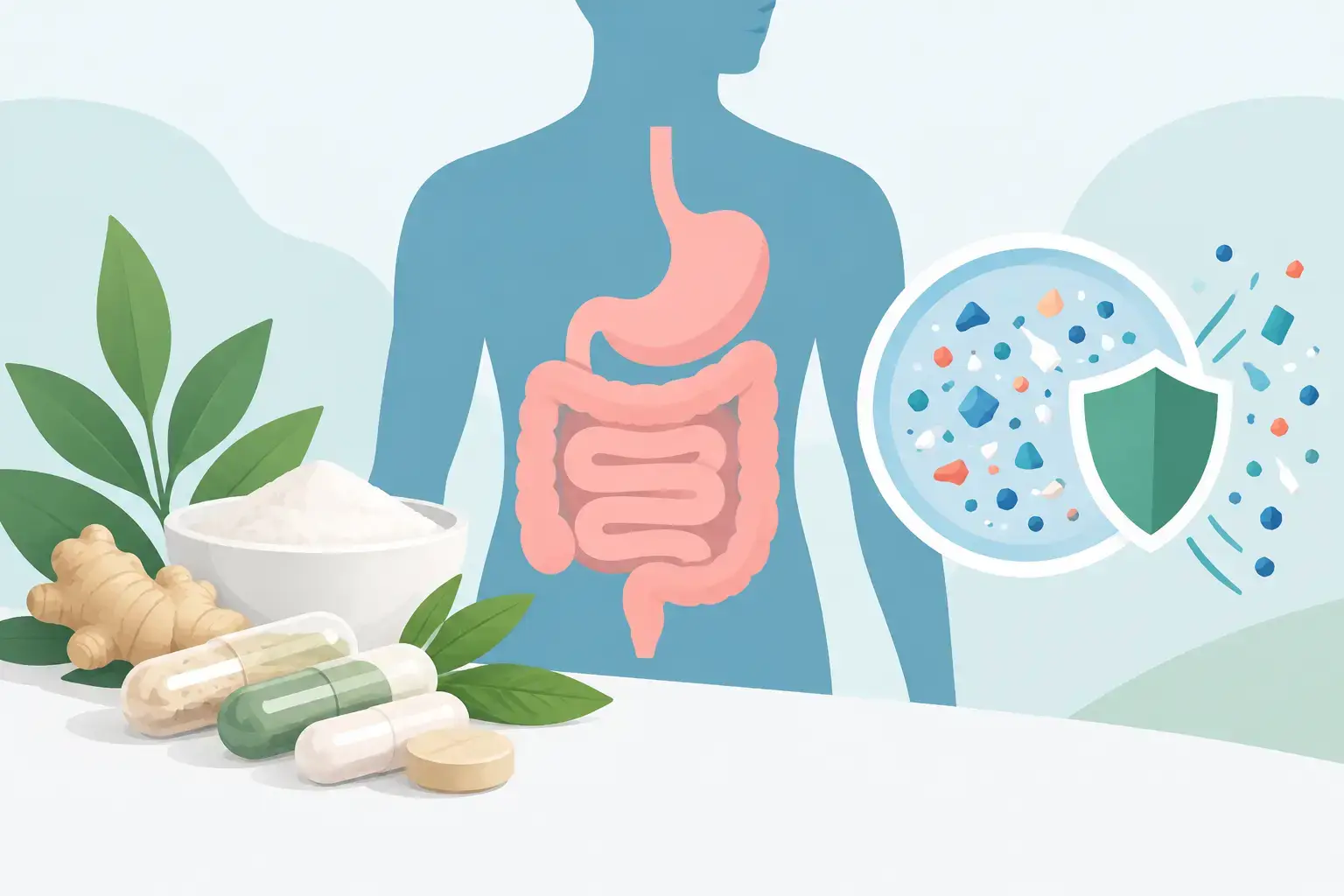
A daily digestive supplement used to mean one thing: relief after a heavy meal. That definition is no longer big enough. Food, water, and air can all carry micro- and nanoplastic particles, making digestive health a frontline concern for people who want practical control over a modern exposure they cannot completely avoid.
The right digestive supplement should not rely on vague promises to “cleanse” your body. It should have a clear purpose, a mechanism you can understand, and a role that fits your daily routine. For microplastic defense, the central question is not whether you can eliminate every source of plastic. You cannot. The question is whether you can support your digestive system’s normal process of moving unwanted particles out.
Why Digestive Supplements Need a New Job
Most digestive supplements fall into familiar categories. Probiotics are intended to support a balanced gut microbiome. Enzymes help break down components of food. Fiber supports regularity and stool bulk. These can be useful tools, depending on your diet, symptoms, health history, and clinician’s guidance.
But broad digestive support is not the same as a targeted response to microplastics. A general probiotic may support digestive comfort without being designed to interact with plastic particles. A fiber powder may support regularity without binding microplastics. Those distinctions matter when the problem you are trying to address is specific.
Plastic is already inside the environment around you. It can enter through bottled water, packaged foods, seafood, household dust, food-storage containers, and countless other ordinary routes. Reducing exposure is worthwhile: choose glass or stainless steel when practical, avoid heating food in plastic, and filter water when it makes sense for your household. Still, exposure reduction is not total elimination. That is why a daily, digestion-based layer of defense deserves attention.
What to Look for in Digestive Supplements
A label can tell a compelling story, but the ingredient’s intended action should be equally compelling. When evaluating digestive supplements, start with the mechanism. Ask what the formula is designed to do in the digestive tract, how it is expected to do it, and whether that function is supported by relevant testing.
For a microplastic-focused formula, a physical mechanism is especially meaningful. Rather than asking the body to “detox” through a vague metabolic promise, a targeted approach can aim to trap and bind particles in the gut, then support their passage through normal digestion. Think of it less like a stimulant cleanse and more like a protective capture layer.
Look closely at the quality signals behind that claim. A company should be able to explain whether its formula has laboratory data, human testing, intellectual-property protection, and qualified scientific or medical development. Those details do not make every supplement right for every person, but they help separate a defined technology from generic wellness marketing.
Ingredients and manufacturing standards matter, too. Health-conscious consumers should expect transparent labeling, sensible dosing instructions, and products manufactured to appropriate quality standards. If you are pregnant, nursing, immunocompromised, managing a gastrointestinal condition, or taking prescription medication, speak with your healthcare professional before adding a new supplement. “Natural” does not automatically mean appropriate for every body or every medication regimen.
The Biofilm Difference
Biofilms are communities of microorganisms that adhere to a surface and create a protective matrix. In the digestive setting, that adhesive quality can be directed toward a different purpose: creating a physical barrier that may capture particles moving through the gastrointestinal tract.
Qi601’s My Gut Guardian™ uses Qi601™ Biofilm Shield™ technology, a proprietary postbiotic/probiotic strain formulated to form an adhesive biofilm in the digestive system. The intended process is direct and easy to visualize. First, the daily capsule reaches the gut. Next, the biofilm acts like a magnet, trapping and binding micro- and nanoplastic particles. Finally, those captured particles are supported through the body’s normal digestive elimination process.
That is a fundamentally different proposition from taking a general probiotic and hoping it covers every digestive concern. It is a targeted microplastic-defense strategy built around the physical behavior of an adhesive biofilm. Laboratory findings associated with this technology report binding of up to 98% of plastic particles under test conditions. Human testing, doctor-led development, and a portfolio of more than 50 patents add important context to a category that is often crowded with broad, interchangeable claims.
The distinction is also why expectations should remain realistic. A supplement cannot make plastic exposure disappear from modern life, replace a nutrient-dense diet, or compensate for severe digestive symptoms that need medical attention. Its role is to provide a consistent layer of digestive support against one defined exposure concern.
How to Build a Daily Microplastic Defense Routine
Consistency matters more than dramatic, short-term “detox” protocols. The digestive system works every day, and environmental exposure happens every day. A one-capsule routine is designed to be repeatable, not punishing.
Take a targeted digestive supplement exactly as directed on its label, and make it part of an existing habit such as breakfast, your morning water, or brushing your teeth. If you use other supplements, read labels carefully so you understand what overlaps and what does not. More products do not automatically create better protection.
Support the routine with ordinary exposure-reduction choices that you can actually sustain. Store leftovers in glass when possible. Do not microwave food in plastic containers. Ventilate and clean your home regularly to help manage household dust. Favor minimally packaged foods when it is convenient, not because perfection is required. The goal is fewer unnecessary sources, paired with a concrete response to the exposure that remains.
Your digestive habits still matter. A varied, fiber-forward diet, adequate hydration, movement, and regular meals can support normal bowel function. This is not a glamorous answer, but it is the foundation. A biofilm-based microplastic defense is designed to work with normal digestion, not around it.
When a General Gut Product May Be Enough
Not every person needs a microplastic-focused digestive supplement for every goal. If your priority is occasional digestive discomfort after dairy, an enzyme formula may be more relevant. If your clinician has recommended a specific probiotic strain for a documented need, that recommendation should lead. If constipation is the concern, food, hydration, activity, medications, and medical causes deserve a closer look before adding another product.
The case for a targeted biofilm approach is strongest when you are specifically concerned about ongoing microplastic exposure and want a simple daily action that addresses it through the digestive tract. It is for the person who has already seen the headlines, understands that avoidance has limits, and does not want to settle for doing nothing.
Questions Worth Asking Before You Buy
A confident supplement decision begins with clear questions. Is the formula designed for a specific purpose, or does it rely on catch-all detox language? Does the company explain how it works in plain English? Are performance claims tied to named testing conditions rather than presented as a guarantee of personal outcomes? Is the dose easy to take consistently? And does the product fit your own health situation?
Be wary of products that promise to purge toxins overnight, create extreme bowel changes, or suggest they can diagnose, treat, cure, or prevent disease. The best digestive supplements respect the body’s normal systems. They support a defined function without turning fear into exaggerated promises.
Microplastic exposure may be a modern reality, but helplessness is not. Build the habits you can sustain, choose a mechanism you can explain, and give your digestive system a daily defense that has a clear job to do.