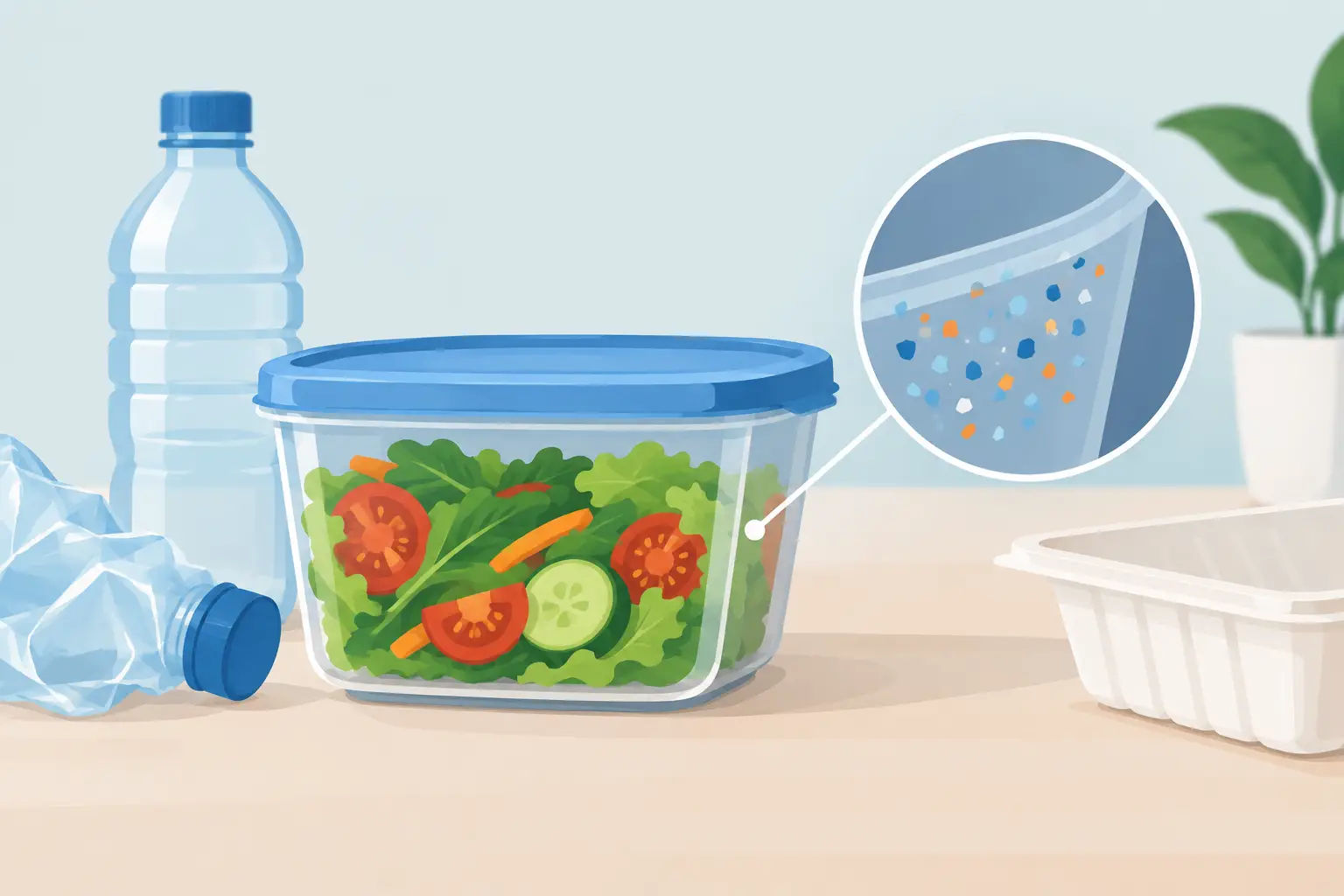
That leftover soup cooling in a takeout container, the water bottle baking in a hot car, the scratched plastic meal-prep tub in your microwave – these everyday moments raise a valid question: can plastic leach into food? Yes. Under certain conditions, chemicals and tiny plastic particles can transfer from plastic food-contact materials into what you eat or drink.
That does not mean every plastic container instantly contaminates every meal. It means exposure is shaped by real-world variables: temperature, time, friction, acidity, fat content, and the condition of the container itself. Plastic is convenient. But Plastics Don’t Belong in Your Body™ – and knowing where the risk rises gives you a practical way to reduce it.
Can Plastic Leach Into Food? Yes, Especially Under Stress
Plastic packaging is not one single material. Food containers, wraps, bottle linings, utensils, pouches, and takeout tubs can be made from different polymers and may contain different additives. Migration is the term used when substances move from packaging into food. Microplastics and nanoplastics are another concern: physical fragments that can shed as materials wear, degrade, or are exposed to heat and handling.
The central issue is not whether plastic touches food once. It is whether the contact happens under conditions that encourage transfer. Heat can increase molecular movement. Scratches and repeated washing can roughen a surface. Oily or acidic foods may interact differently with packaging than dry crackers or a cold sandwich.
Microplastics are now detected across the environment, including the food, water, and air people encounter every day. Avoiding every source is unrealistic. Reducing preventable exposure, however, is within reach.
The Conditions That Raise Transfer Risk
Heat changes the equation
High heat is one of the clearest reasons to rethink plastic food contact. Microwaving, pouring boiling liquids into a plastic vessel, and leaving packaged food or bottled beverages in direct sun can all increase the chance of migration or particle shedding.
A container labeled microwave-safe is designed to meet a specific use standard. It is not a promise that no material transfer can ever occur, particularly after repeated use or when food is hot, fatty, and stored for a long time. When you have a choice, move food to glass or ceramic before reheating. Use a plate or vented glass cover instead of plastic wrap in the microwave.
Wear creates more opportunities for shedding
A clear container can look clean while its surface has become worn from dishwashing, scrubbing, stacking, and daily use. Deep scratches, cloudiness, cracks, warped edges, and a lingering odor are signals that a plastic item has reached the end of its useful life.
This matters most for items exposed to frequent heat and friction: reusable food-storage tubs, blender cups, shaker bottles, plastic cutting boards, and kitchen tools. Replacing heavily worn items is a targeted step, not an invitation to discard every plastic product in your home overnight.
Fatty and acidic foods deserve extra care
Tomato sauce, citrus-based dressings, vinegar-heavy foods, oily leftovers, cheese, and meat sauces can behave differently in contact with packaging than dry foods. Long storage times add another variable. A hot, oily meal sitting in a thin takeout container is a more concerning scenario than a brief transfer of cool, dry food.
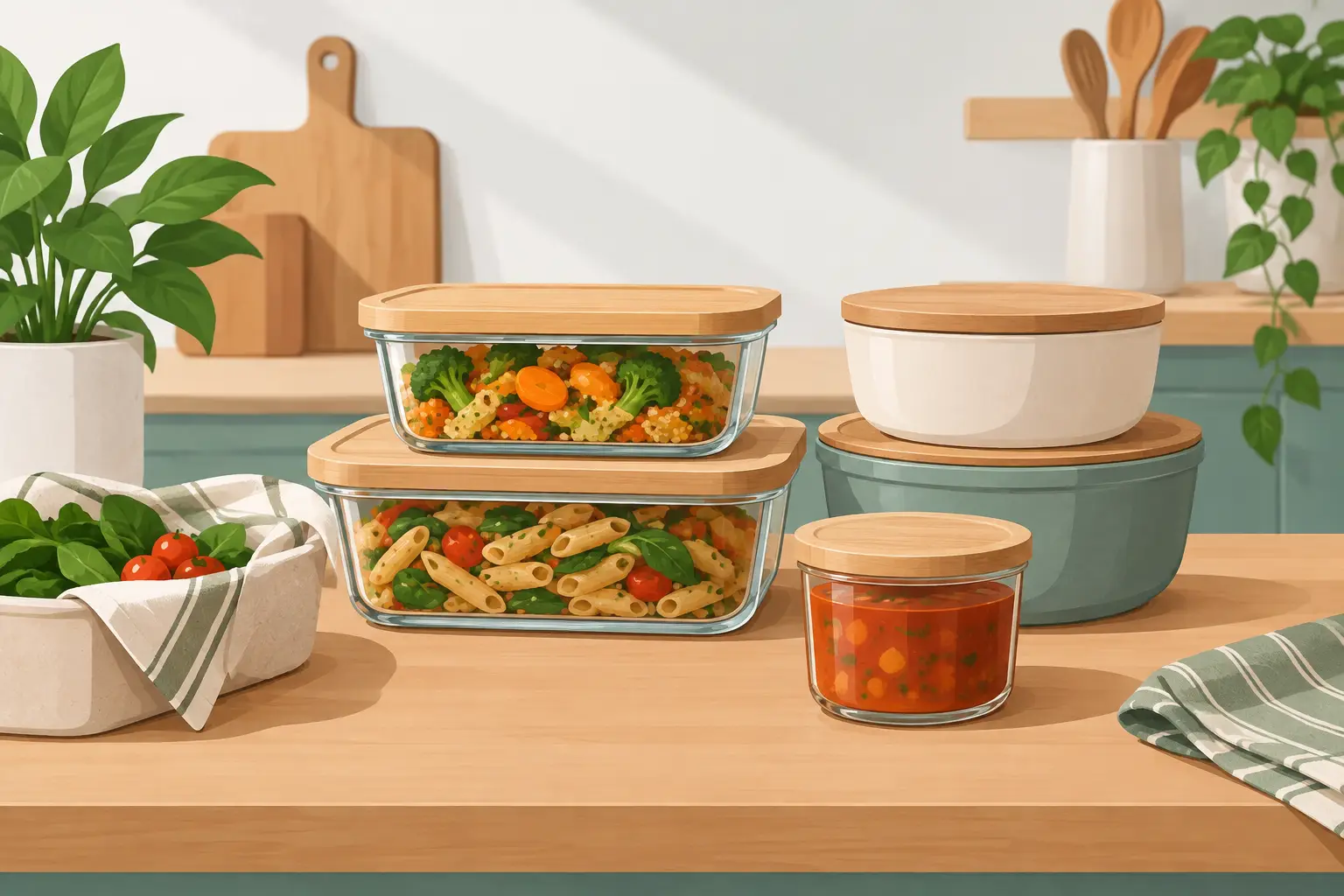
The useful habit is simple: for hot, fatty, or acidic foods, choose glass, stainless steel, or ceramic whenever possible. If takeout arrives in plastic, transfer it before reheating or storing leftovers.
Time and repeated use matter
Contact time is often overlooked. A quick trip home with food in a container is different from storing a meal in that same container for several days. Likewise, disposable packaging is not automatically built for years of repeated washing and reheating.
Use single-use plastic as intended, rather than turning it into a permanent meal-prep system. Reserve durable glass containers for routine leftovers, packed lunches, and batch cooking. Small changes compound because they apply to meals you eat week after week.
Food Sources People Often Miss
The obvious examples are plastic water bottles and microwave containers. But food-contact plastics appear in places most kitchens treat as ordinary: jar lids with plastic liners, tea bags, single-serve coffee pods, plastic-coated paper cups, squeeze bottles, cling film, and packaged convenience foods.
You do not need to make food shopping exhausting. Think in terms of high-frequency swaps. If you drink hot coffee every day, use a ceramic or stainless-steel mug. If you pack lunch most workdays, make glass storage your default. If bottled water is an occasional backup, that is different from relying on it as your main source of hydration.
It also helps to remember that “BPA-free” does not mean plastic-free or particle-free. It refers to the absence of one chemical, not a guarantee that the package cannot shed particles or contain other substitutes. Labels can inform a choice, but they are not a complete exposure strategy.
A Practical Plastic-Reduction Routine
The goal is not perfection. It is to lower the avoidable exposure that occurs in your own kitchen and daily routine. Start with the moments where heat, repeat use, and food contact overlap.
First, stop microwaving food in plastic when an alternative is available. Move leftovers into glass or ceramic before heating, and avoid covering hot food with plastic wrap. Second, replace damaged storage containers, old shaker bottles, and heavily scarred plastic cutting boards. Third, avoid leaving bottled drinks or plastic-packed food in a hot car, sunny windowsill, or outdoor heat.
For hydration, filtered tap water in a stainless-steel or glass bottle can reduce dependence on single-use bottles. For groceries, choose fresh or frozen foods when it is practical, and use glass jars or cartons for selected staples. For leftovers, cool food in an uncovered glass or stainless-steel container before sealing and refrigerating.
These are not purity rules. They are control points. A busy parent may still need takeout. A traveler may still buy bottled water. The protective move is to avoid turning the highest-risk conveniences into automatic daily habits.
What Reducing Exposure Can and Cannot Do
Food packaging is only one route of exposure. Microplastics can also be encountered through drinking water, household dust, air, synthetic textiles, and industrial pollution. That is why a single swap cannot eliminate the problem.
But the fact that exposure is widespread is not a reason to give up. It is a reason to focus on realistic layers of defense: reduce exposure where you control it, support normal digestive health, and be cautious about products that promise to erase a complex environmental issue overnight.
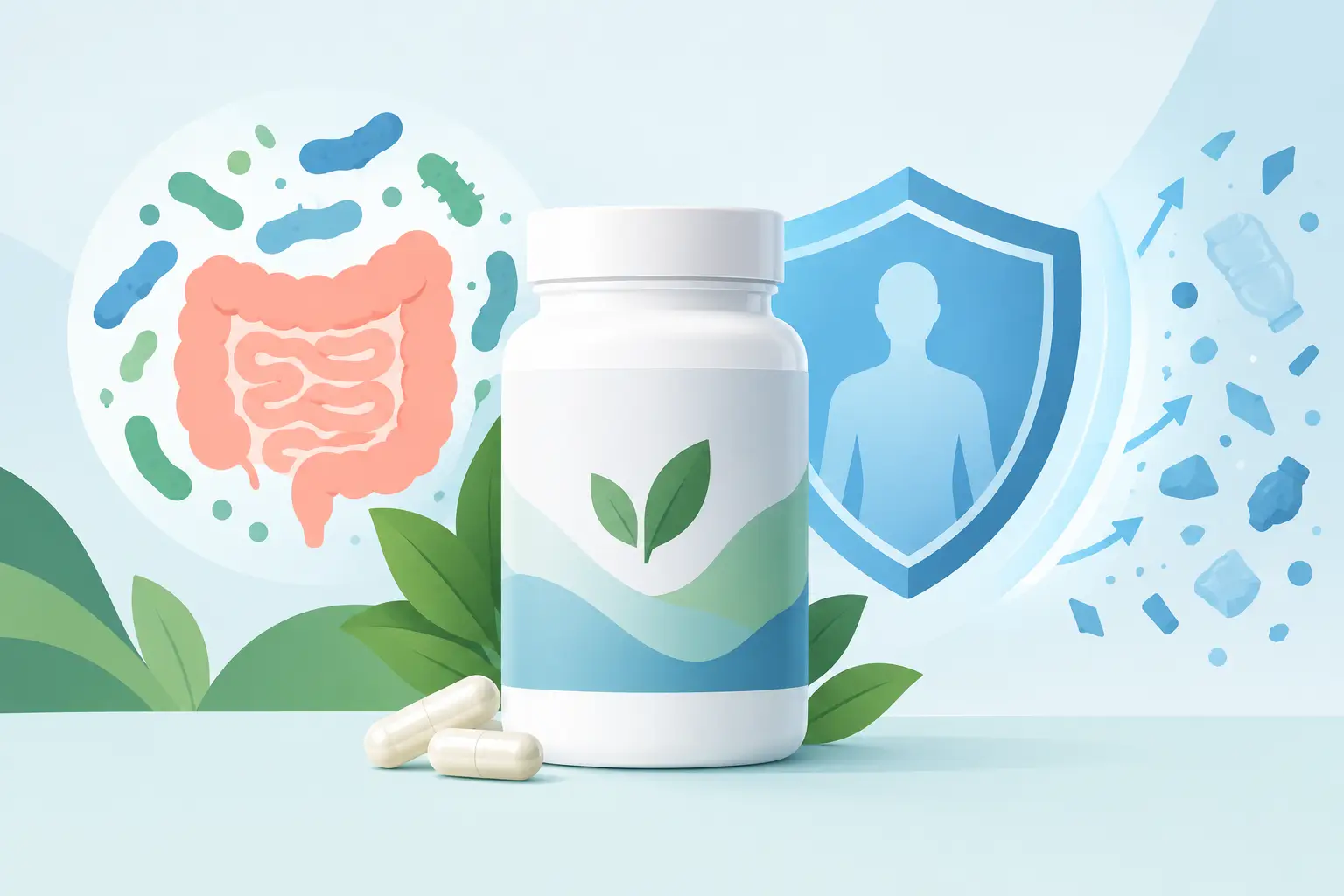
For people seeking a targeted daily response, Qi601’s My Gut Guardian™ is designed around its Biofilm Shield™ approach: supporting the digestive process by trapping and binding plastic particles for normal elimination. Dietary supplements are not a replacement for exposure-reduction habits, and they are not intended to diagnose, treat, cure, or prevent disease. They can be one part of a broader personal-defense routine.
The Better Question to Ask at Mealtime
Instead of asking whether it is possible to live without plastic, ask: “Where is plastic touching my hot food, drinks, or cooking surfaces every day?” That question points directly to the decisions that matter most.
Choose the glass container. Retire the scratched tub. Let the takeout cool before transferring it. Keep water out of a hot car. These small acts are not dramatic, but they are protective – and protection is built one daily decision at a time.